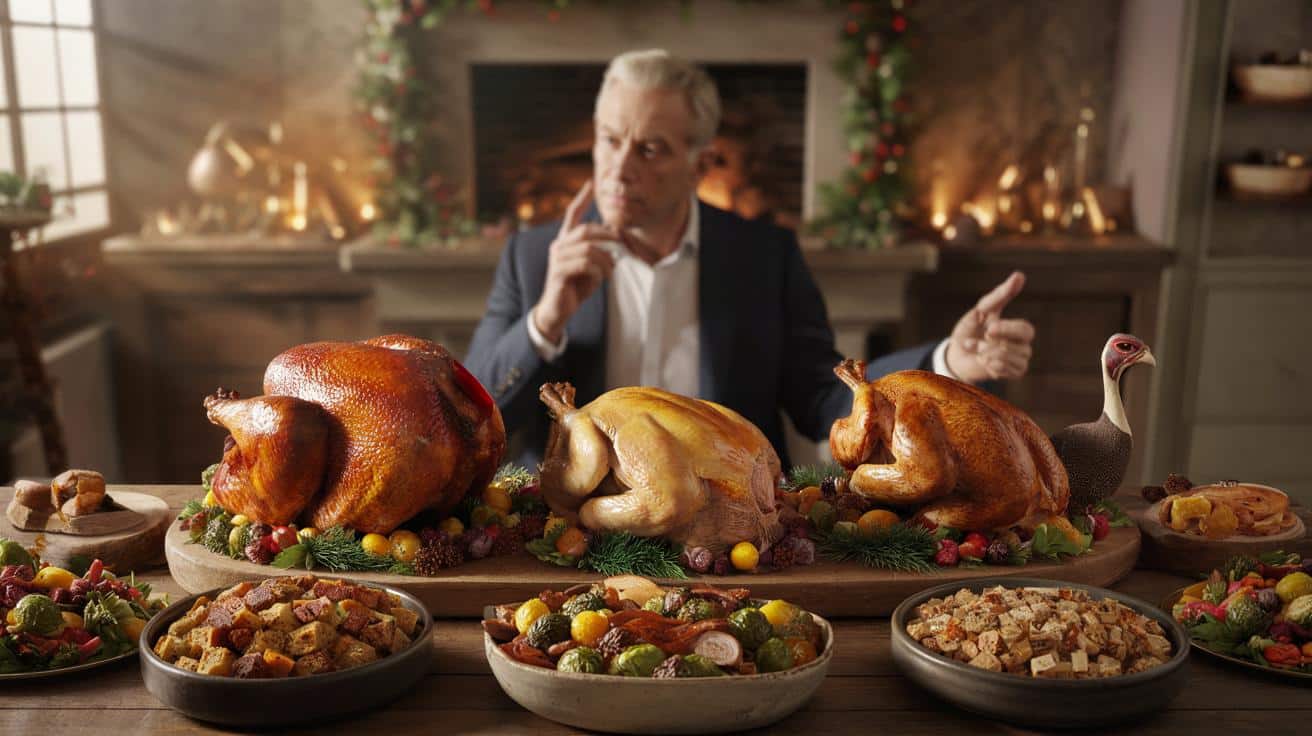
Across France and far beyond, Christmas still often means a big roast at the centre of the table. Yet behind that picture-perfect bird lies a real balancing act between pleasure, digestion and nutrition. French dietitian-nutritionist Raphaël Gruman has been advising families on festive menus for years, and his guidance sheds light on the subtle differences between capon, turkey and guinea fowl – and why the real traps often lurk in the stuffing and added fat, not in the meat itself.
Choosing the bird: capon, turkey or guinea fowl?
Before picking a bird, it helps to understand that each choice brings its own flavour profile, texture and fat content. The label on the counter rarely tells the full story.
The capon: indulgent and generous
Capon – a castrated rooster, usually raised longer – is prized in France for its incredibly tender, melting flesh. That soft texture has a price: more intramuscular fat.
This higher fat content gives a rich mouthfeel and a strong festive character. For households that see Christmas as the one time of year to truly indulge, capon is often top of the list.
Capon is closer to a “treat meat”: deeply comforting, full-flavoured, and not designed for a light supper.
On a nutritional level, capon is still a source of quality protein, but it carries more calories per slice than leaner birds. It suits smaller gatherings, where you can serve moderate portions and balance the rest of the menu with lighter starters and sides.
The turkey: lean and crowd-pleasing
Turkey has a very different profile. Its white meat is naturally low in fat and calories, especially without the skin. For people monitoring their weight or their cholesterol, this is usually the safest option.
The main drawback is dryness. A large turkey, cooked too hot or too long, can end up stringy and bland. That problem often pushes cooks to drown it in butter or cream-based sauces, which defeats the purpose of choosing a lean bird in the first place.
Turkey is a great base for a lighter Christmas, as long as juiciness comes from the cooking method, not from a block of butter.
➡️ If you want beautiful apples, this step is indispensable starting today
➡️ So wählen Sie Gartensamen, die zu Ihrem Boden passen und Erträge maximieren
➡️ So entfernen Sie Kaugummi von Textilien mit Essig und sparen teure Reinigungsdienste, einfach
➡️ Diese einfache Regel beim Online-Einkauf verhindert spontane Fehlkäufe
➡️ Leclerc: Michel-Édouard Leclerc warnt Kunden vor einer schlechten Nachricht
➡️ Get ready: in 2026, generative AI shifts into a higher gear
For big families or blended households, turkey remains practical: it yields many portions, offers both white and dark meat, and pairs easily with classic trimmings like roasted vegetables, chestnuts and cranberry-style fruit sauces.
The guinea fowl: an elegant middle ground
Guinea fowl sits somewhere between the two. Its meat is firmer and more flavourful than turkey, with a slightly gamey note that feels refined without being overpowering.
From a nutrition standpoint, it usually contains less fat than capon but a bit more than very lean turkey breast. That makes it attractive for those who want character on the plate without going all-in on richness.
Guinea fowl is best for smaller groups – four to six people – and works wonderfully with aromatic herbs, citrus or light wine-based sauces. It suits diners who love taste but do not necessarily want to feel heavy for the rest of the evening.
What really makes poultry heavy: stuffing and added fat
Raphaël Gruman insists on one key idea: the bird itself is only half the story. What you add to it counts just as much for digestion and calorie load.
Stuffing: the hidden calorie bomb
Traditional Christmas stuffings often mix fatty sausage meat, bacon, cream, and sometimes foie gras. Delicious, yes, but they can turn a relatively light bird into a nutritional grenade.
A rich stuffing can double or triple the total calories of an otherwise lean turkey, even if you barely touch the skin.
This means a turkey filled with fatty charcuterie can end up heavier on the stomach than a capon paired with a lighter, plant-based stuffing. The equation shifts with every ingredient you add.
A more balanced stuffing can rely on:
- wholemeal or rye bread, slightly dried, to absorb juices
- finely chopped vegetables like carrots, celery, leeks or mushrooms
- dried fruits such as apricots, prunes or raisins for gentle sweetness
- nuts and seeds in small amounts for crunch and healthy fats
- fresh herbs (parsley, thyme, sage, rosemary) and spices
By keeping processed meats to a small share of the mixture, you keep flavour without pushing the fat content through the roof.
Butter, oil and basting: how much is too much?
Many family recipes start with “take 200 g of butter and rub it all over the bird.” This technique gives fast colour and aroma, but it also adds a significant amount of saturated fat.
When you slather the skin with butter, you are not just making it shine – you are layering extra calories on every slice.
Raphaël Gruman’s advice leans toward moderation rather than strict bans. A small amount of fat, used well, makes sense: it carries flavours, improves tenderness and helps the skin crisp.
Some practical swaps include:
| Traditional habit | Smarter alternative |
|---|---|
| Coating the whole bird in butter | Brushing lightly with olive or rapeseed oil and seasoning generously |
| Basting only with melted butter | Basting with hot vegetable or chicken stock, splash of white wine and herbs |
| Thick cream-based gravy | Pan juices deglazed with stock, onion, garlic and a little starch to thicken |
These changes maintain flavour but keep the meal more digestible, especially for older guests or people with sensitive stomachs.
Where to buy: butcher, supermarket or DIY stuffing?
Once the bird is chosen, the point of purchase can quietly influence both taste and nutrition.
The case for going to a butcher
According to Gruman, independent butchers generally select better-reared poultry and offer house-made stuffings that rely more on actual meat and less on cheap added fats.
Artisan butchers tend to use higher-quality cuts in their stuffing, with fewer hidden fillers and additives.
This does not automatically make every butcher’s bird perfect, but it raises the odds of getting a product with better texture, more flavour and fewer ultra-processed ingredients. For families who can afford it, it is often the best balance between quality and nutrition.
Pre-stuffed industrial birds: why to be cautious
Supermarkets widely sell frozen or chilled birds already stuffed and trussed. The price tag is attractive, and the promise of “ready to bake” can feel like a life-saver in December.
Yet the hidden side is less festive. Industrial stuffing often contains:
- less actual meat and more breadcrumbs, starches and water
- cheap fats like palm or low-grade animal fat
- flavour enhancers, preservatives and high amounts of salt
That combination can quickly push the meal toward higher calories and more sodium, while not necessarily improving taste. For people with high blood pressure or heart issues, this can matter a lot.
Making your own stuffing: control and creativity
Preparing stuffing at home demands some time, but it hands full control back to the cook. You choose the meat, the bread, the vegetables, the fruits and the amount of fat.
Home-made stuffing lets you decide whether Christmas means heavy and creamy, or fragrant and balanced.
It also makes it easier to adapt to guests: one batch without pork, one with nuts, one more spicy, another alcohol-free for children. Leftover stuffing, baked in a separate dish, can be frozen in portions for simple weeknight meals later on.
Practical scenarios for different Christmas tables
To make these guidelines concrete, imagine a few typical situations.
For a large family with several older relatives and some guests managing cholesterol, a medium-sized turkey with a vegetable-rich stuffing, cooked slowly and basted with stock, offers a safer path. Sides like roasted carrots, celeriac mash and a light gravy keep the meal festive without leaving people uncomfortably full.
For a smaller group of food lovers who accept a bit more richness, a capon or guinea fowl rubbed with herbs and a modest amount of fat, stuffed with dried fruits, nuts and wholegrain bread, can feel luxurious while staying balanced. Serving plenty of seasonal greens – like sautéed Brussels sprouts or a sharp winter salad – helps digestion and cuts through the richness.
Key terms and health angles to bear in mind
Several concepts often crop up when professionals talk about festive poultry. “Digestibility” refers not only to calories, but also to how easily the stomach and intestines handle the meal. Very fatty sauces, heavy charcuterie-based stuffing and huge portions lengthen digestion and can trigger heartburn or discomfort at night.
Another term frequently used is “added fat.” Poultry naturally contains some fat, especially in the skin and, in the case of capon, within the muscle fibres. Everything spread on the bird or mixed into the stuffing – butter, cream, oils, bacon, foie gras – is counted as added fat. Managing these additions intelligently lets you keep the pleasure of roast poultry while reducing the risk of post-meal fatigue.
Finally, there is the question of what happens beyond Christmas Day. Choosing slightly lighter options for the roast and stuffing often means fewer leftovers that feel cloying or greasy. Leaner meat and balanced trimmings turn into sandwiches, salads or soups that still feel appealing on 26 December, rather than something you are already tired of.